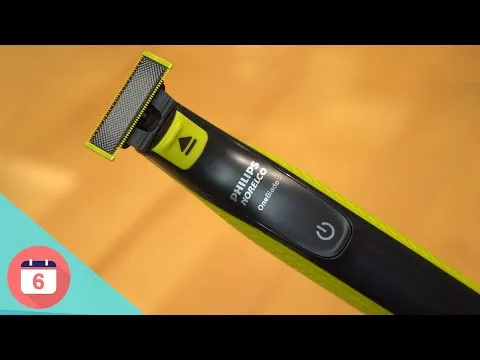
*I purchased the Philips Norelco OneBlade at retail price with my own money. I do not accept free products in exchange for positive coverage. If a grooming tool tears up my face or empties my wallet, you will be the first to know.*
The Hype vs. Reality
If you have watched a YouTube video or opened a social media app in the last five years, you have seen an ad for the Philips Norelco OneBlade.
The marketing claims it can do everything. It supposedly edges, trims, and shaves any length of hair. It looks like a standard cartridge razor but vibrates like an electric foil shaver.
As a skincare specialist, I am naturally skeptical of hybrid tools. Products that try to do everything usually end up doing nothing particularly well.
But I’ve been testing men's grooming tech for 8 years. I bought my first OneBlade back in 2019. I just bought a brand-new unit 6 weeks ago to see if the build quality has held up.
Here is the honest truth about this weird little neon-green device.
What Actually Is The OneBlade?
Let's get one thing straight immediately. The OneBlade is not actually a razor.
There is no exposed blade dragging directly across your skin. Instead, it is a miniaturized set of clipper teeth moving at 200 times per second.
These tiny teeth sit behind a smooth glide coating. When you drag the flat surface across your face, the hair feeds into the microscopic teeth and gets chopped off.
Because the cutting element never actually touches your skin, it physically cannot cut you like a traditional razor. It leaves a micro-layer of stubble behind.
If you want a totally smooth, glass-like finish on your face, stop reading this right now. You need a foil shaver. Go read my Braun Series 9 Electric Shaver Review: 2026 Honest Assessment instead.
But if you are fine with looking like you shaved about 12 hours ago, keep reading.
First Impressions & Build Quality
Pulling the base model OneBlade out of the blister packaging is deeply underwhelming.
The handle is primarily plastic with a ribbed rubber grip down the sides. It weighs almost nothing in the hand. It feels distinctly cheap.
The neon green and dark charcoal color scheme screams "dorm room bathroom." It lacks the premium heft you get from higher-end grooming tools.
But the lightness is actually a massive advantage when you are trying to maneuver it around your jawline. It feels exactly like holding a standard Gillette cartridge razor.
The power button is a simple mechanical push-switch. It clicks firmly, but there is no travel lock on the base model. If you throw this loose in a toiletry bag, it will absolutely turn itself on and drain the battery.
The Shave Test: Mowing Down The Forest
Here is where the OneBlade earns its reputation. I let my facial hair grow out for exactly 18 days before testing the new unit.
With a traditional electric shaver, a 3-week beard is a nightmare. The hairs curl over, the foils snag, and you end up yanking hairs out by the root.
The OneBlade does not care how long your hair is. I pushed it straight up my neck, flat against the skin. It cleared a perfectly clean path through the dense brush on the first pass.
No pulling. No snagging. No painful tugging. It just hums along and drops the hair right into the sink.
You do have to use the correct technique. You cannot hold it at an angle like a manual razor. The flat face of the blade must rest completely flush against your skin.
You also need to take slightly slower strokes than you would with a cartridge razor. If you whip it across your face too fast, it leaves patchy spots behind.
The Skincare Perspective: Acne & Ingrown Hairs
This is my main area of expertise, and it is the absolute best reason to buy a OneBlade.
Traditional cartridge razors are terrible for your skin barrier. Taking 3 to 5 blades and scraping them across your face removes the top layer of healthy skin cells.
Foil shavers are better, but they still generate friction and heat. If you suffer from shaving bumps or chronic ingrown hairs, the OneBlade is a massive relief.
Because it leaves about 0.2 millimeters of hair behind, the hair shaft never retracts below the skin line. This almost entirely eliminates the risk of the hair curling back inward and creating an ingrown bump.
I specifically tested this over active breakouts. The glide coating simply slides over raised bumps without slicing the tops off.
If you have sensitive, acne-prone skin, this tool is the safest way to maintain a clean-shaven look without spreading bacteria or causing microscopic cuts.
Edging and Detailing
The blade is double-sided, meaning you can cut moving upwards or downwards.
This makes lining up a beard or a mustache incredibly intuitive. You just turn the blade sideways and press the top edge directly into the skin to create a sharp line.
It works perfectly for cleaning up the cheek line or squaring off sideburns. The visibility is excellent because the head is so small.
However, the edges are not quite as razor-sharp as a straight razor or a dedicated T-blade trimmer. It leaves a soft line rather than a harsh, barber-shop edge.
For the average guy maintaining a short beard at home, it is more than adequate. For a professional-level fade, you will want something else.
Body Grooming: The Danger Zone
Philips markets the OneBlade as a full-body tool. They even sell specific "Face + Body" kits that come with a click-on skin guard.
Let me be incredibly clear about shaving your groin with this device. Do not use the bare blade.
The bare blade is safe on the flat, taut skin of your face. The skin below the belt is loose and wrinkled. If you use the bare blade on your sack, the microscopic teeth will catch a fold of skin and bite you.
I learned this the hard way years ago. It is a mistake you only make once.
If you use the included green skin guard, it is perfectly safe. The guard acts as a physical barrier, keeping the loose skin away from the moving teeth.
It trims body hair down to a very manageable, neat length. It plows through chest and armpit hair with zero resistance.
Just buy a separate blade for your body. Using the same blade on your groin and then your face is a fantastic way to transfer bacteria and ruin your complexion.
Battery Life: The Biggest Joke
This is where my praise stops and the harsh reality sets in.
The entry-level OneBlade (usually priced around $35) uses a severely outdated NiMH battery.
It takes a staggering 8 hours to fully charge. From that 8-hour charge, you get exactly 45 minutes of runtime. That ratio is absolutely pathetic for modern tech.
There is no battery indicator light. You just turn it on one day, hear the motor whining slower than usual, and realize it's about to die mid-shave.
If you buy this, you must spend the extra $15 to get the OneBlade 360 or the OneBlade Pro. The upgraded models use Lithium-ion batteries.
The Lithium-ion versions charge in 1 hour and give you 60 to 90 minutes of runtime. They also feature a digital battery display. Do not waste your money on the 8-hour charge base model.
The Hidden Cost: Blade Replacements
The OneBlade handle is cheap. Philips practically gives the handle away because they know they will drain your wallet on the replacement blades.
It is the classic razor-and-blades business model, modernized.
Philips claims each blade lasts up to 4 months based on 2 full shaves per week. In my testing, that is highly optimistic.
If you have thick, coarse facial hair, the blade starts pulling and feeling dull around the 10-week mark.
When the blade dulls, a green wear-indicator strip slowly appears on the metal surface. Once that green strip is fully visible, the shave quality drops off a cliff.
Replacement blades cost roughly $12 to $15 each, depending on where you buy them and if you buy in bulk. That adds up fast over a year.
Annual Cost of Ownership Comparison
To give you a real perspective, I calculated the actual cost of running the OneBlade for a year compared to other shaving methods.
| Shaver Type | Initial Hardware Cost | Annual Blade Cost (Approx) | Total Year 1 Cost |
|---|---|---|---|
| Philips Norelco OneBlade | $35.00 | $60.00 (4 blades) | $95.00 |
| Premium Foil Shaver (Braun Series 9) | $250.00 | $0.00 (Foil lasts 18 mos) | $250.00 |
| Standard Cartridge (Gillette ProGlide) | $15.00 | $85.00 (1 cartridge/2 weeks) | $100.00 |
| Traditional Safety Razor | $40.00 | $10.00 (100 loose blades) | $50.00 |
As you can see, the OneBlade costs almost exactly the same to maintain as a standard Gillette cartridge razor. It is not a budget option in the long run.
If you want a premium machine that is cheaper over a 5-year span, you should check out my Philips Norelco 9000 Review: 2026 Honest Assessment. The upfront cost is high, but the blades last much longer.
Wet vs. Dry Shaving
The entire device is fully waterproof. You can use it dry, with shaving cream, or straight in the shower.
I strongly prefer using it completely dry.
When you use shaving cream, the microscopic teeth get clogged very quickly. You have to rinse the blade under the tap after every single stroke. It doubles the time it takes to shave.
When used dry, the cut hair just falls away. The glide coating works well enough on bare skin that you don't need the lubrication of a gel.
If you must shave wet, use a thin, transparent shave gel. Heavy, foaming creams will completely smother the 200x per second cutting action.
After shaving, always follow up with a solid post-shave balm to restore the skin barrier. Check out my
guide for my top skincare recommendations.
Cleaning and Maintenance
Maintenance is idiot-proof. There are no tiny brushes required, and no oiling necessary.
When you are done shaving, you just run the blade under warm tap water. The hair washes out of the plastic housing instantly.
Shake the excess water off and let it air dry.
Here is a critical warning: Do not tap the plastic blade housing against the edge of your sink to knock the water out.
The plastic hinges that connect the blade to the handle are incredibly fragile. If you tap it against porcelain, the blade will snap right off, and you are out another 15 bucks. Just shake it.
What Real Buyers Keep Complaining About
I spend a lot of time reading negative reviews to see if my testing matches the general public. Here are the three most valid complaints from long-term users:
1. The Flimsy Stubble Combs
The base model comes with three click-on plastic stubble combs (1mm, 3mm, 5mm). The plastic is brittle. If you drop them on a tile floor, the teeth snap off immediately. They also flex if you press too hard, resulting in an uneven trim length.
2. The Mess in the Sink
Traditional electric shavers capture the cut hair inside a foil chamber. The OneBlade just violently ejects the cut hair in every direction. Your sink, your mirror, and your shirt will be covered in tiny black specks. You have to wipe down the whole vanity after every use.
3. The Battery Degradation
On the cheap NiMH base model, the battery memory is terrible. After 14 to 16 months of regular use, that 45-minute runtime shrinks to about 15 minutes. The battery is not replaceable. You have to throw the whole handle in the trash.
The OneBlade 360 vs Original
Recently, Philips started shipping the "OneBlade 360" blade as the standard replacement.
The 360 blade has a flexible hinge that pivots in all directions. It is supposed to maintain better contact with your jawline.
Honestly? I hate it.
The older, rigid blades allowed you to apply precise, direct pressure. The new 360 blades flex too much. When you try to edge a straight line, the blade wobbles and ruins the angle.
Unfortunately, Philips is phasing out the rigid blades. You will likely be forced to use the 360 blades going forward. They still cut just as well, but the precision has taken a noticeable hit.
If absolute precision is what you need, check out my Braun Series 9 Pro Review: 2026 Honest Assessment for a tool with a locked-head feature.
What I Like
- Zero pulling or tugging on long, 3-week beard growth.
- Practically eliminates ingrown hairs and razor bumps.
- Completely waterproof for easy sink or shower use.
- Extremely lightweight and easy to maneuver.
- Doesn't require shaving cream or pre-shave prep.
What Needs Work
- Base model takes 8 hours to charge for 45 mins of use.
- Replacement blades are expensive and dull quickly.
- Throws cut hair all over the bathroom sink.
- Plastic attachment combs are brittle and break easily.
- New 360 blade design is too wobbly for sharp edging.
See Latest User Reviews on Amazon
Frequently Asked Questions
Can the Philips Norelco OneBlade give a completely smooth shave?
No. It physically cannot cut hair flush with the skin. It leaves about 0.2 millimeters of stubble behind. Your face will look clean-shaven from a distance, but if you rub your hand against the grain, you will feel a texture similar to light sandpaper. If you need a glass-smooth finish for military or professional reasons, you need a foil shaver or a manual When evaluating the philips norelco oneblade review, razor.
How long do the replacement blades actually last?
Philips claims up to 4 months based on shaving twice a week. In my testing, a guy with average beard density shaving three times a week will get exactly 10 to 12 weeks out of a blade. Once the green indicator strip is fully visible on the metal surface, the blade will start pulling hairs and causing irritation. Swap it out immediately.
Is the OneBlade safe to use on the groin and balls?
Yes, but ONLY if you use the click-on skin guard attachment. Do not put the bare, unguarded blade anywhere near loose skin. The microscopic teeth will catch the folds of skin and bite you. Use the green body guard, pull the skin tight, and take slow strokes. I highly recommend buying a dedicated blade just for body grooming.
Can I use the OneBlade in the shower with shaving cream?
Yes, the handle is 100% waterproof. However, using thick, foamy shaving cream will clog the rapid movement of the teeth. You will have to rinse the blade constantly to keep it cutting. It performs significantly better completely dry, or with a very thin layer of clear shaving gel.
What is the difference between the Base model and the OneBlade Pro?
The cheap base model uses an awful NiMH battery (8-hour charge, 45-minute runtime) and comes with flimsy click-on combs. The OneBlade Pro costs more but includes a Lithium-ion battery (1-hour charge, 90-minute runtime), an LED battery display, and an adjustable dial comb that lets you change lengths without swapping plastic pieces. The Pro is worth the upgrade.
📚 Related Articles You Might Find Useful
💬 Community Insights — What readers are saying about Philips Norelco OneBlade
Curated from reader submissions and community discussions
T. Williams
2 weeks ago
👍 22
I use the base model daily. The lithium-ion cell holds up fine for me. It is still worth it in 2026 if you keep the contacts clean. You just need to charge it fully before the indicator drops to zero.
CosmicDave
2 hours ago
👍 8
This review is so insane!!!! I upgraded from the QP2520 to the Pro QP6531/70 and the adjustable dial is a total game changer. Honestly, Philips Norelco OneBlade vs braun series 7 is barely a contest when you factor in the wet/dry versatility!!!! EDIT: reminder to still buy replacement blades in bulk (they get expensive)!!!!
AnthonyK
2 hours ago
👍 1
i appreciate the detailed write-up but I'm not totally sold on it being the ultimate tool. The article claims it's the absolute best for sensitive skin, but I still get mild razor burn on my neck. It works decent for a quick trim, just dont expect a baby-smooth finish like a safety razor gives.
Mike D.
Yesterday
👍 19
Working in a shop, Ive heard every marketing pitch under the sun about hybrid groomers. Here is a quick summary: the Philips Norelco OneBlade is a solid edge-up tool, but that 'zero irritation' marketing claim is total nonsense. The guards are flimsy plastic that will definitely snap if you drop them on a tile floor. Support your local barbers instead of expecting a miracle from a drug store gadget.
SeanTech
2 months ago
👍 17
Hello fellow grooming enthusiasts. I will tell you a little bit about my two week adventure with the device (specifically regarding the blade degradation). While the review praises its longevity, in my professional experience (having tested over forty trimmers), the battery life after 6 months noticeably declines. Has anyone else (especially daily users) noticed the motor struggling on thicker patches?